Causly Lab

Causly Lab

Ideas, builds and systems for a more autonomous future.

Get insights in your inbox

High-signal content on AI, automation and building systems.

Have an idea?

Suggest a topic or request a deep dive.

A clearer tomorrow built together

- Causly

Explore everything we've researched, built, tested, and learned.

Experiment

How I Hardened an AI Agent Tool Server Before Launch

Giving an AI agent real tools on your machine is useful, and risky. Before launching Causly Server 1.6, I went through a full security pass: operator approval and a policy file, a workspace limit that covers Docker mounts, minimal environments for child processes, credential redaction, SSRF and prompt-injection checks, and a read-only mode. Here’s what I changed, why, and what’s still not covered.

Nov 10, 2026→
Insight

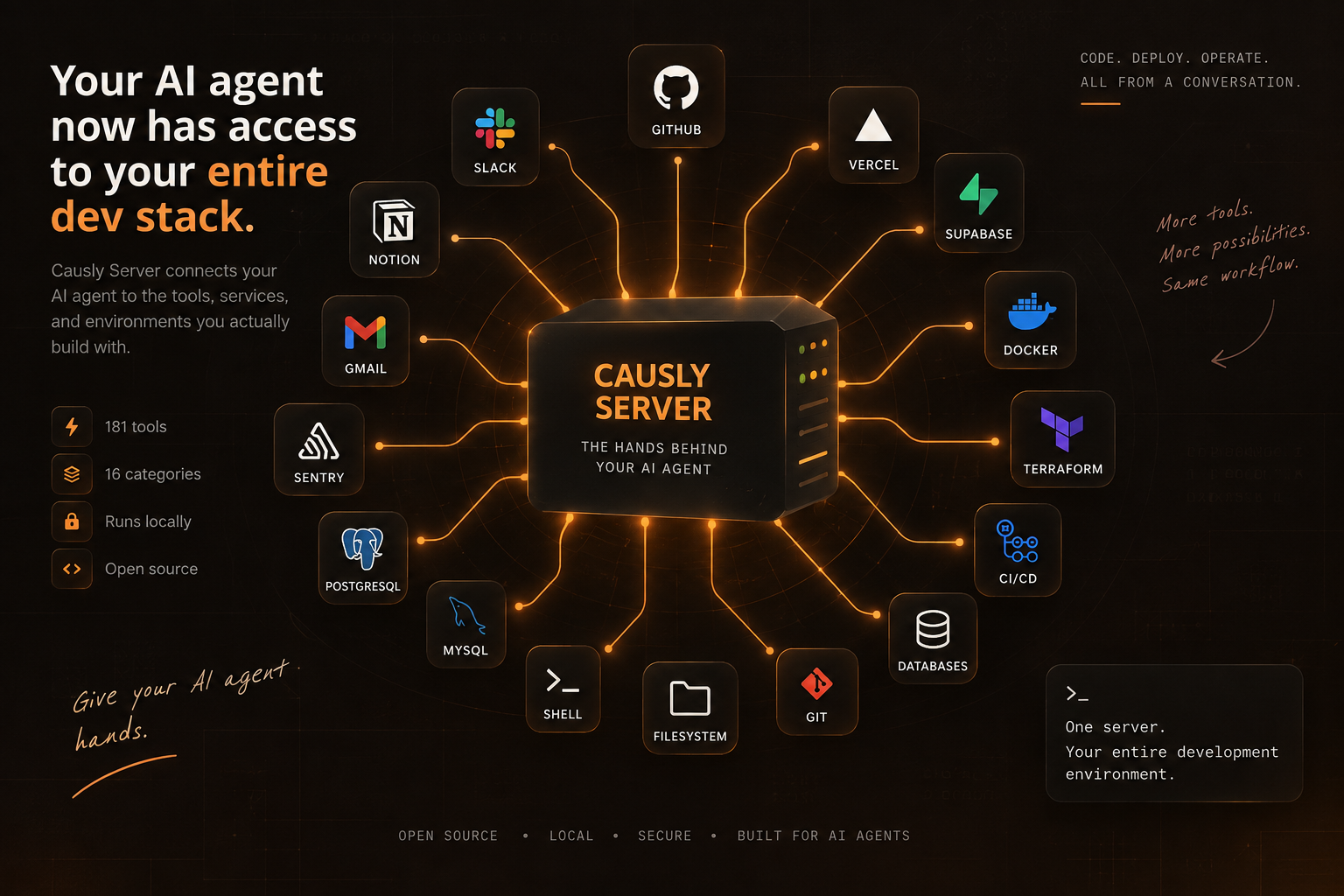
Causly Server: What If Your AI Agent Had Hands?

AI agents already know how to reason and write code. The problem is everything they still can't reach. Causly Server gives MCP-compatible agents a unified way to work across your development environment—from files and databases to infrastructure, deployment, communication, and more.

Nov 10, 2026→
Insight

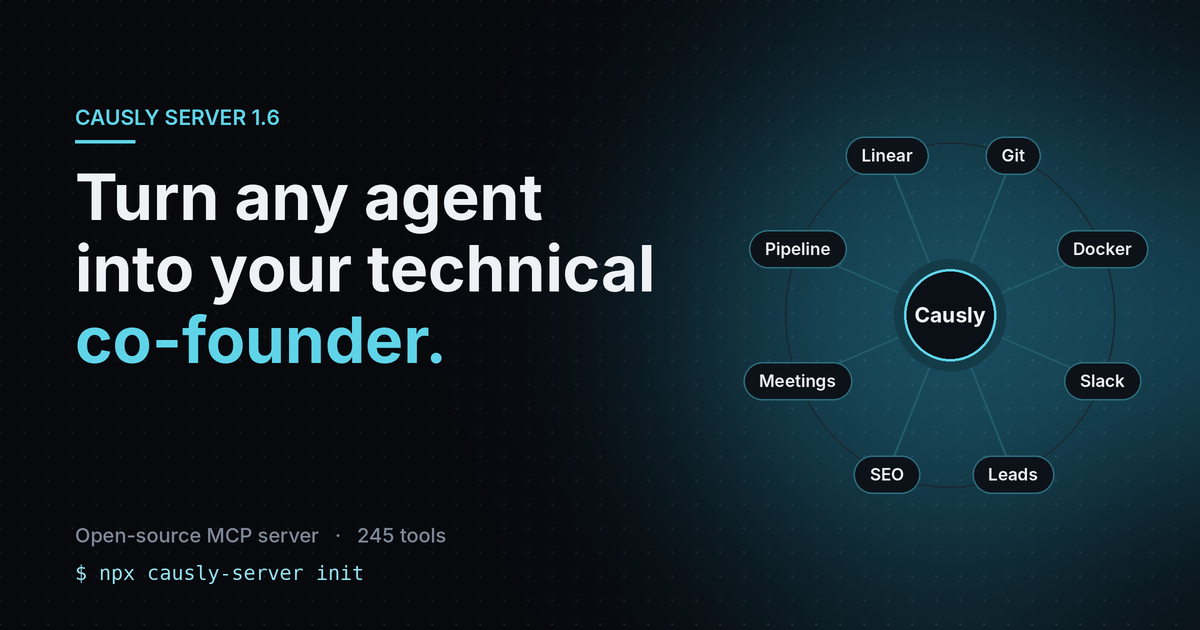
Causly Server 1.6: Turn Any AI Agent Into Your Technical Co-Founder

What if your AI agent could do more than write code? Causly Server is an open-source MCP server that gives any MCP-compatible agent 245 tools to work like a technical co-founder: ship code, research the market, find leads, track your pipeline, and turn meetings into action items. It installs with one command, works with Claude Desktop, Cursor, and custom agents, and keeps you in control with approval prompts, a workspace limit, and a read-only mode. Here’s what’s new in 1.6 and why we built it this way.

Nov 10, 2026→
Insight

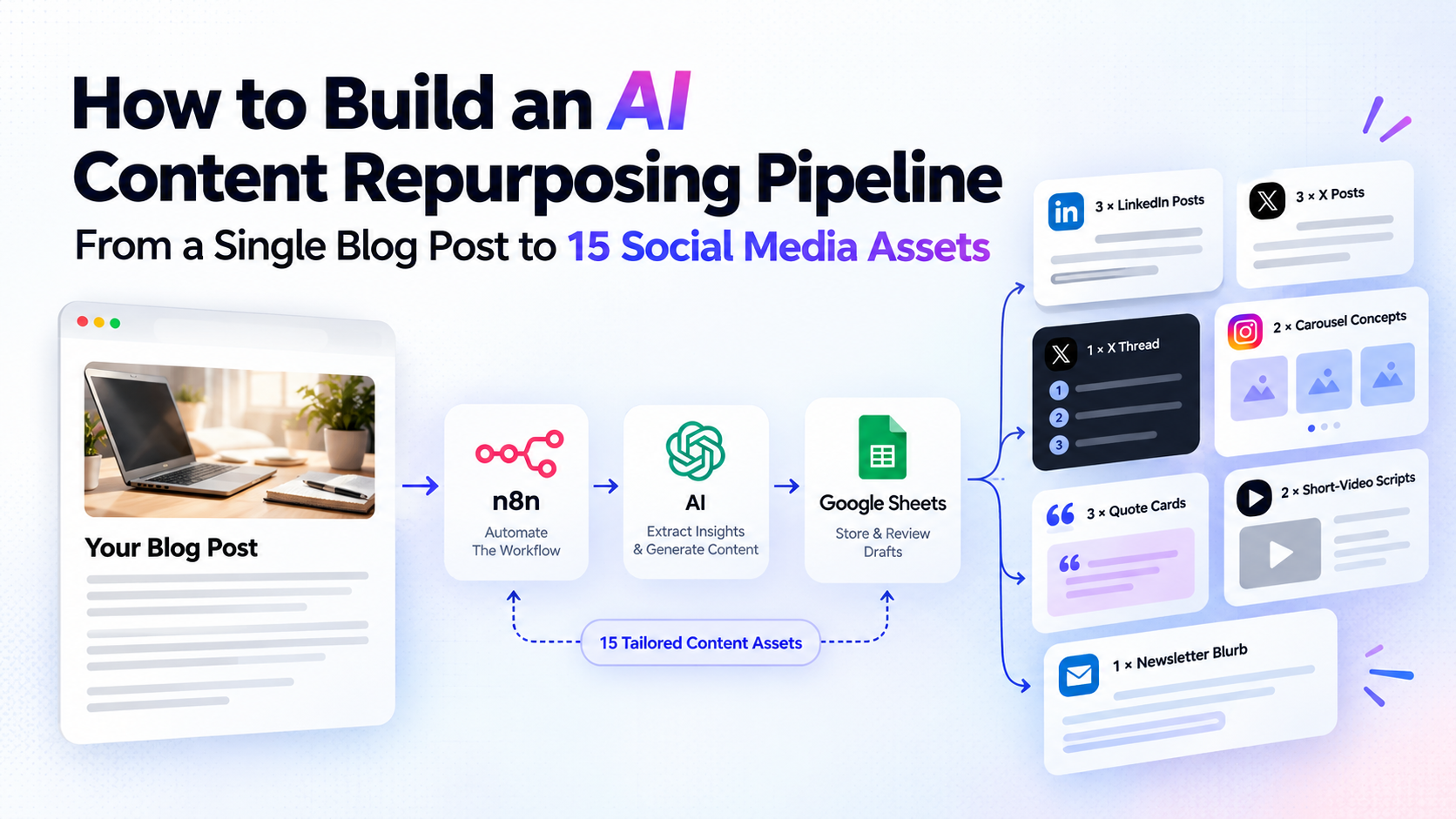
How to Build an AI Content Repurposing Pipeline: From a Single Blog Post to 15 Social Media Assets

Learn how to build an AI-powered content repurposing workflow that transforms one blog post into 15 social media assets using n8n, AI, and automation. Follow the practical implementation to generate platform-specific content, validate outputs, and streamline your content distribution process.

Oct 29, 2026→
Technical dive·Lead Enrichment Automation: Complete Guides & Tutorials

The Silent Killer of Lead Enrichment: 9 Workflow Failures That Break Your CRM Data

Lead enrichment workflows can silently corrupt CRM data through duplicate records, incorrect identity matching, stale information, unsafe field updates, and API failures. This practical guide breaks down nine common failure scenarios, with independent code examples, reproducible tests, and fixes for building more reliable enrichment automation.

Oct 26, 2026→
Technical dive·Lead Enrichment Automation: Complete Guides & Tutorials

Your Workflow Says Success, But Your CRM Never Updated: How to Detect and Fix Silent Failures

Your workflow reports success, but your CRM never updates. Learn how to detect missing, partial, and delayed CRM writes with destination-state verification, a practical Python implementation, and automated tests.

Oct 23, 2026→
Technical dive·Lead Enrichment Automation: Complete Guides & Tutorials

Why Your No-Code Lead Enrichment Is Blasting Your API Budget (And How to Fix It)

Discover how duplicate API calls, inefficient enrichment workflows, and missing caching can inflate your lead enrichment costs. Learn practical ways to optimize API usage with n8n, Python, and custom code.

Oct 23, 2026→
Technical dive·Lead Enrichment Automation: Complete Guides & Tutorials

Clay vs. n8n vs. Zapier vs. Make vs. Custom Code: Choosing the Right Lead Enrichment Stack in 2026

Compare Clay, n8n, Zapier, Make, and custom code for lead enrichment. Explore pricing, flexibility, scalability, and the best stack for your business.

Oct 23, 2026→
Technical dive

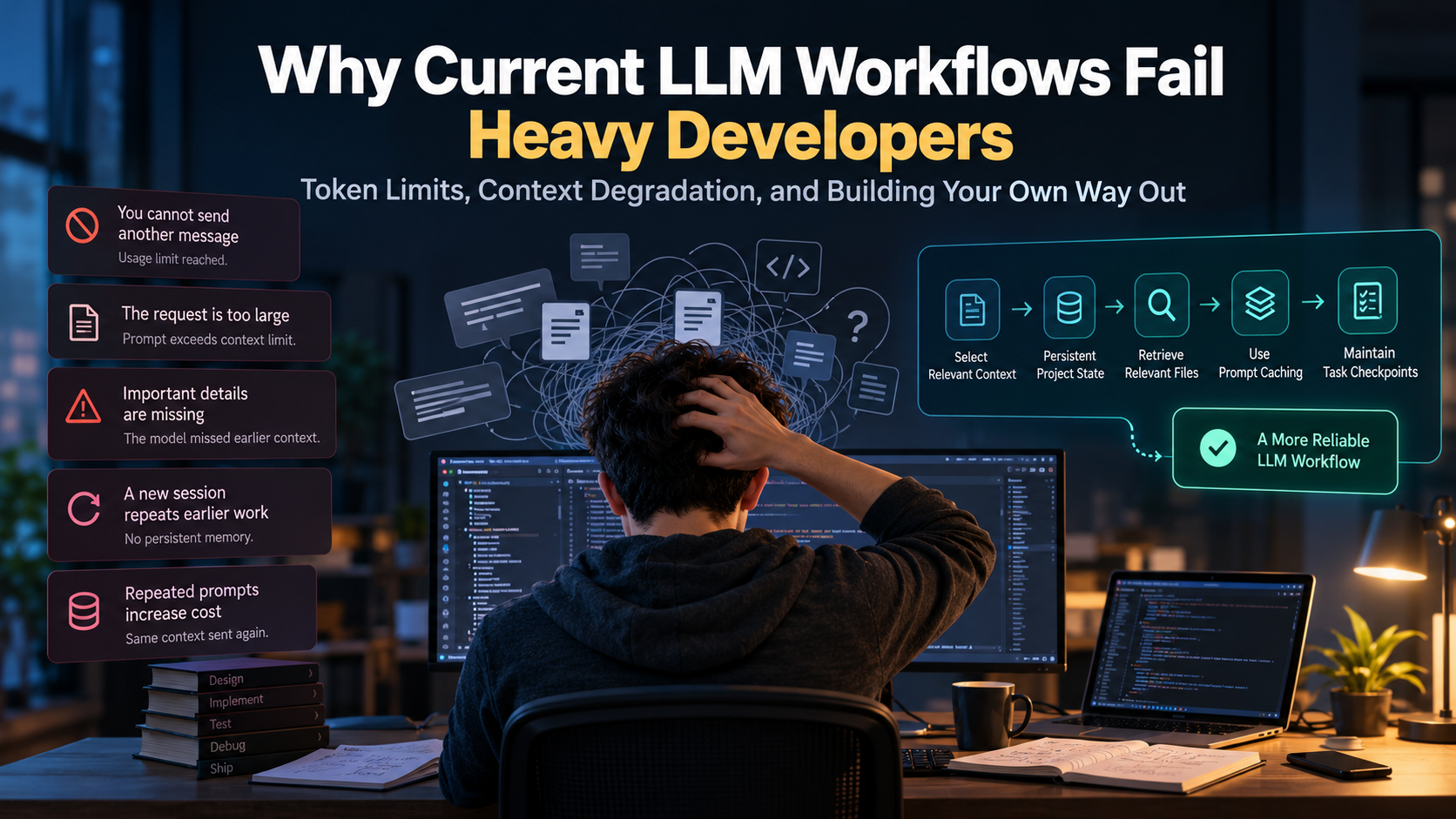
Why Current LLM Workflows Fail Heavy Developers: Token Limits, Context Degradation, and Building Your Own Way Out

As developers push AI assistants into long-running coding sessions and complex projects, token limits, context degradation, and usage restrictions become real bottlenecks. Explore why these workflows break down and how building a custom AI agent runtime can give developers greater control over context, memory, and task execution.

Oct 22, 2026→